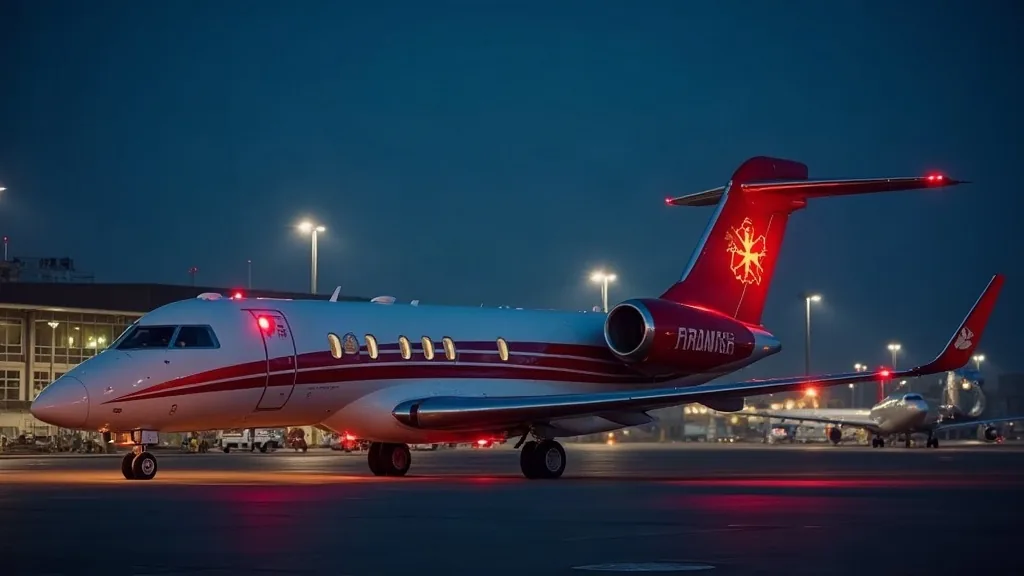
A Raja Ampat medical evacuation moves a diver or trauma patient from a resort or liveaboard to the nearest capable hospital or hyperbaric chamber, coordinating a boat leg to Sorong, a fit-to-fly check, and a licensed air operator. Juara Holding Group runs this as an independent coordination desk — arranging vetted, licensed partners on both the sea and air legs, never operating aircraft or vessels itself.
What happens when a diver gets decompression sickness in Raja Ampat?
Raja Ampat’s dive sites sit hours by boat from the nearest airstrip, so the first 60-90 minutes decide the outcome more than the aircraft that eventually shows up. The immediate sequence, drawn from how Indonesian dive operators and the coordination desk actually work a case:
- On-site first response. Guide or dive master starts 100% oxygen, keeps the diver supine or in the recovery position, and logs dive profile, time of symptom onset and symptom progression.
- Call placed to the coordination desk. Resort, liveaboard crew or dive guide relays vessel/resort name, GPS or nearest dive site, patient age and symptoms, and dive computer data if available.
- Local doctor consult. A fit-to-fly assessment starts immediately by phone or, where the resort has one, in person — this determines whether the case can wait for a boat transfer or needs the fastest available lift.
- Boat-to-Sorong leg activated in parallel. Most Raja Ampat resorts and liveaboards are 2-6 hours by fast boat from Sorong; this leg starts before the air decision is finalized so no time is lost.
- Air routing decided once the patient reaches Sorong or a stabilizing point, based on chamber availability and severity (see the decision matrix below).
Indonesia’s 2024 air-medevac readiness study (Indonesian air medical evacuation: analyzing readiness and proposing an integrated standard procedure) found no single regulation yet governs air medevac procedure or stakeholder integration nationally — which is precisely why a case needs one desk holding the sequence together rather than the diver’s group calling multiple providers separately.
Where is the nearest hyperbaric chamber, and when is Singapore the better call?
Papua and West Papua have no hyperbaric chamber physically in Raja Ampat or Sorong. The nearest recompression options are all a further flight away, so the real decision is which one — and whether treatment-in-Indonesia or international repatriation gets the patient to definitive care faster.
| Destination | Approx. distance/flight time from Sorong | What it offers | Indicative use case |
|---|---|---|---|
| Manado (Sulawesi) | ~1.5-2 hrs by air (indicative) | Regional referral hospital network | Type I DCS, stable trauma needing sooner arrival than Jakarta |
| Makassar (Sulawesi) | ~2-2.5 hrs by air (indicative) | Larger referral hospital base, naval medical facilities in the region | Trauma or DCS cases needing broader specialist bench |
| Jakarta / Bali | ~3.5-4.5 hrs by air (indicative) | Established hyperbaric chamber access (Jakarta), full trauma centers | Type II DCS, multi-system trauma, cases needing definitive Indonesian tertiary care |
| Singapore | International repatriation, typically staged via Jakarta or Bali | Full ICU/hyperbaric/trauma infrastructure, insurer-network hospitals | Severe or complicated DCS, cases under an international assistance policy |
These are indicative bands only, not scheduled block times — actual routing depends on aircraft position, weather, and which chamber confirms bed and equipment availability that day. Chamber and hospital status changes; the desk verifies current operational status with the receiving facility before committing a routing, rather than assuming a chamber listed in general references is staffed and ready that week.
Decision matrix: DCS Type I vs Type II vs trauma
| Presentation | Typical first move | Typical routing bias |
|---|---|---|
| Type I DCS (joint pain, skin marbling, fatigue) | Oxygen, hydration, monitor 30-60 min | Boat to Sorong, reassess before committing to which chamber city |
| Type II DCS (neurological signs, dizziness, breathing difficulty, altered consciousness) | Oxygen, urgent doctor consult, prepare for fastest available lift | Air evacuation prioritized to nearest confirmed chamber, no wait-and-see |
| Trauma (fracture, marine injury, cardiac event) | Standard first aid/stabilization, doctor consult on evacuation urgency | Nearest hospital capable of the specific trauma type, not necessarily a chamber city |
Which airfields and boat legs are actually used?
Sorong (DEO) is the commercial gateway for Raja Ampat and carries the majority of medevac traffic out of the region; Waisai’s airstrip serves some inter-island connections but Sorong remains the practical hub for onward fixed-wing routing to Manado, Makassar, Jakarta, Bali or international connections. From most liveaboard itineraries and resort clusters (Dampier Strait, Misool, Kri/Mansuar, Waigeo), the boat-to-Sorong leg is the fixed constraint — it does not shrink no matter how fast the eventual aircraft is, which is why pre-registering a vessel’s itinerary and nearest-port profile before an incident happens matters more in Raja Ampat than in destinations with a hospital on the mainland.
How do sea state and daylight limit helicopters?
Helicopter evacuation in Indonesia is generally a daytime-only option — providers operating in this space state helicopter evacuation runs 06:00-18:00 local time, not after dark. In Raja Ampat’s more remote dive sites, rough sea state can also rule out a fast boat transfer in favor of a slower, more sheltered route, or push the decision toward waiting for first light rather than attempting a night boat leg in open water. Fixed-wing options from Sorong are not bound by the same daylight-only rule to the same degree, which is part of why the boat-to-Sorong leg is usually the priority move regardless of what happens next in the air.
How booking and activation work
- Pre-register before the trip. Liveaboard or resort sends vessel name, itinerary, guest count, dive profile (max depth, nitrox/trimix use) and nearest hyperbaric chamber preference to the desk.
- Case activation. On an incident, one call to the 24/7 line starts oxygen-first-aid guidance, the fit-to-fly consult and the boat-to-Sorong leg simultaneously.
- Air operator and insurer liaison. The desk coordinates with a licensed air operator and, where applicable, the patient’s dive insurer or assistance company (DAN-type coverage) on authorization and routing.
- Handover. Patient and full case notes are handed to the receiving hospital or chamber team; the desk stays on the line for family and insurer updates.
| Coordination option | Typical duration | What it covers |
|---|---|---|
| Single-incident coordination | Case-by-case, hours to 1-2 days | Boat-to-Sorong liaison, air operator sourcing, insurer/assistance contact — indicative, quoted per case, 2026 |
| Liveaboard/resort season retainer | Per season or per charter cycle | Standing pre-registration, priority activation, guest-profile file ready before any incident — indicative, quoted per operator, 2026 |
| International repatriation add-on | Case-by-case | Jakarta/Bali-to-Singapore, Kuala Lumpur, Penang or Bangkok onward coordination — indicative, quoted per case, 2026 |
No public dated tariff table exists for Indonesian air medevac — every operator in this market, including the licensed partners the desk works with, quotes case by case in USD and IDR. Treat any number given outside a live case as a rough planning band only.
Need this arranged now, or want a vessel pre-registered before the season starts? Message the Juara Holding Group concierge desk on WhatsApp at 6281139414563 (or bd@juaraholding.com) with the vessel or resort name, itinerary, guest count and any known medical detail — the desk opens boat-to-Sorong and air-operator coordination immediately, as an independent broker, not the operator of any vessel or aircraft involved.
Frequently Asked Questions
How much does a medical evacuation from Raja Ampat actually cost?
There is no fixed published rate — Indonesian air medevac providers quote case by case in USD and IDR depending on distance, aircraft type and urgency, a pattern confirmed across the market as of 2026. Expect the desk to return an indicative range for your specific case rather than a menu price, and to update it if conditions (weather, chamber choice) change the routing mid-case.
Does dive travel insurance cover a Raja Ampat evacuation?
Most dive-specific and travel-medical policies (DAN-type and similar assistance-company coverage) include evacuation, but coverage limits, pre-authorization steps and which chamber or country they’ll pay to reach vary by policy. The desk liaises directly with your insurer or assistance company during a live case; confirm your own policy’s evacuation limit before your trip, not during the incident.
How long does it take to reach a hyperbaric chamber from a Raja Ampat liveaboard?
There is no single answer — the boat-to-Sorong leg alone typically runs 2-6 hours depending on which dive site you’re at, and the onward flight to a confirmed chamber (Manado, Makassar, Jakarta or Bali) adds roughly 1.5 to 4.5 hours depending on destination, all indicative as of 2026. Sea state, daylight and chamber-bed confirmation each affect the real total more than distance alone.
Can evacuation happen at night from a remote Raja Ampat site?
Boat transfers can sometimes run at night if sea conditions allow, but helicopter evacuation in Indonesia is generally daytime-only, 06:00-18:00 local time, per standard provider practice. A night incident typically means prioritizing the boat leg to Sorong immediately and confirming fixed-wing options for first light or as soon as an aircraft can be positioned.
What should a resort or liveaboard have ready before calling the desk?
Vessel or resort name, current itinerary and nearest port, guest count, the patient’s dive profile (depth, bottom time, gas mix), and a preferred hyperbaric chamber if the guest’s insurer has one. Pre-registering this file before the season starts — rather than gathering it mid-incident — is what actually shortens the time from call to boat departure.